Compare Versori against other iPaaS solutions to discover how it can work best for you.
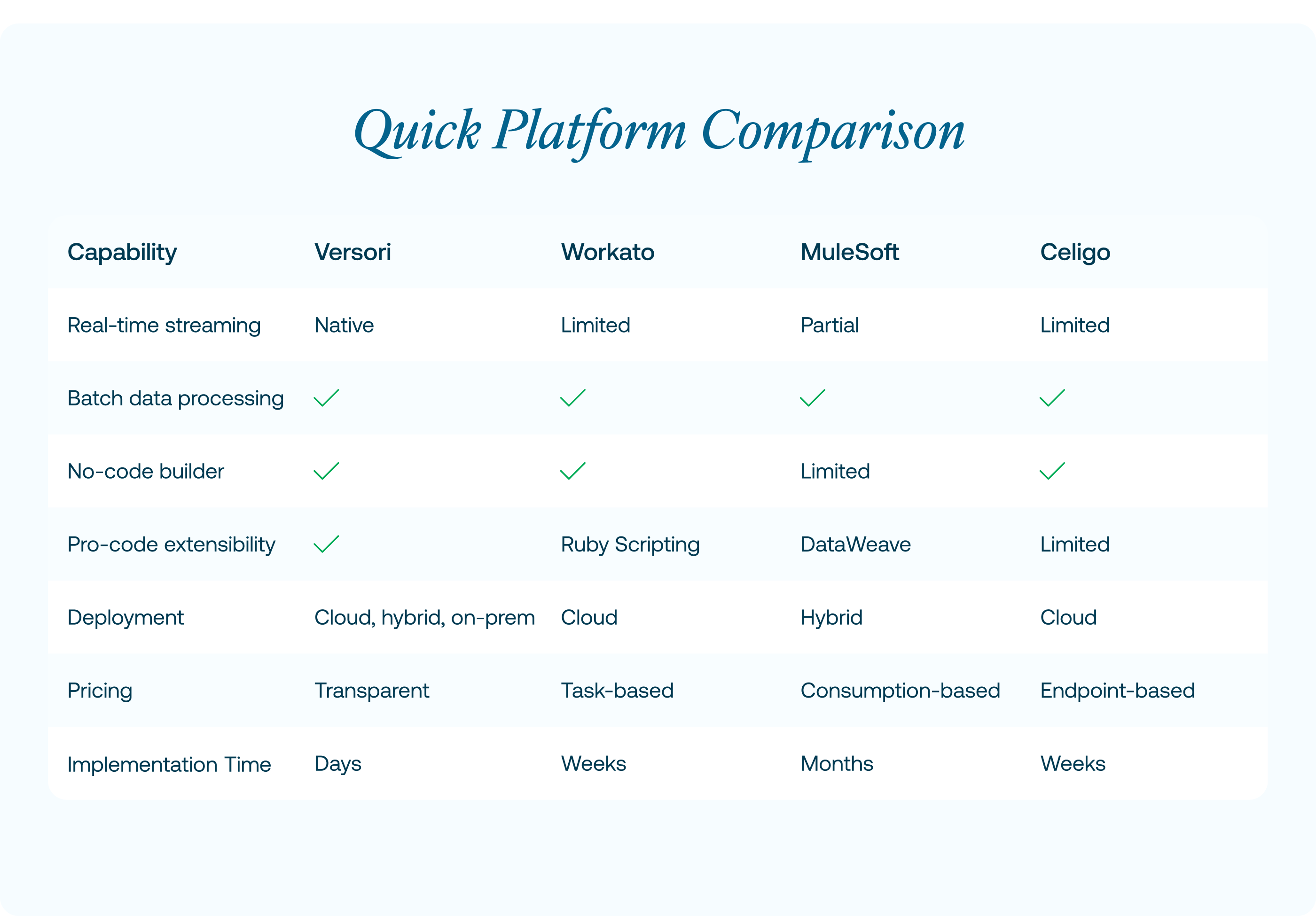
Compare Versori with platforms like Workato, MuleSoft and Celigo to see how modern integration architecture delivers faster deployments, predictable pricing and enterprise-grade scalability.
Platform Comparison
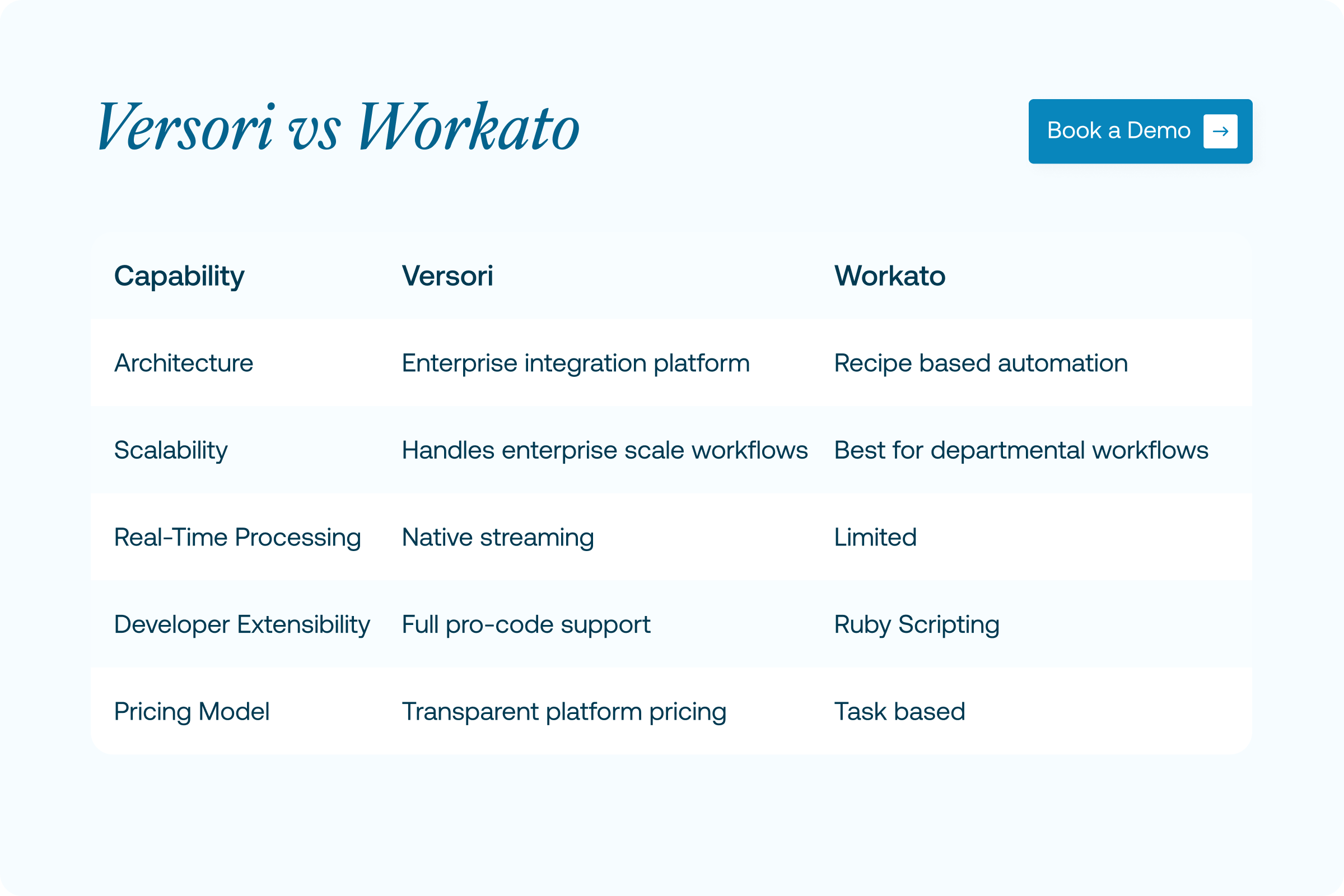
Versori Vs Workato
Beyond Tasks: Integrate Without Usage Surprises As You Scale
Workato is known for fast automation wins. But as workflows grow in volume and complexity, organisations often need a platform designed for enterprise-scale integrations.
Versori combines real-time processing, hybrid deployment and predictable pricing so integrations can scale without unexpected operational costs.
Key Comparisons:
Scale Freely: Workato's recipe model works well for simple automation but can struggle with high-volume integrations. Versori supports both real-time and batch workflows across ERP, CRM, supply chain and data platforms.
Predictable Economics: Workato charges per task, ,meaning every step and loop increases cost. Versori pricing is platform-based, allowing teams to scale integrations withoiut worrying about transaction counts.
Enterprise Governance: Versori includes RBAC, audit logs, encryption and SOC2 compliance built-in, helping teams maintain control across production environments.
Versori vs Workato
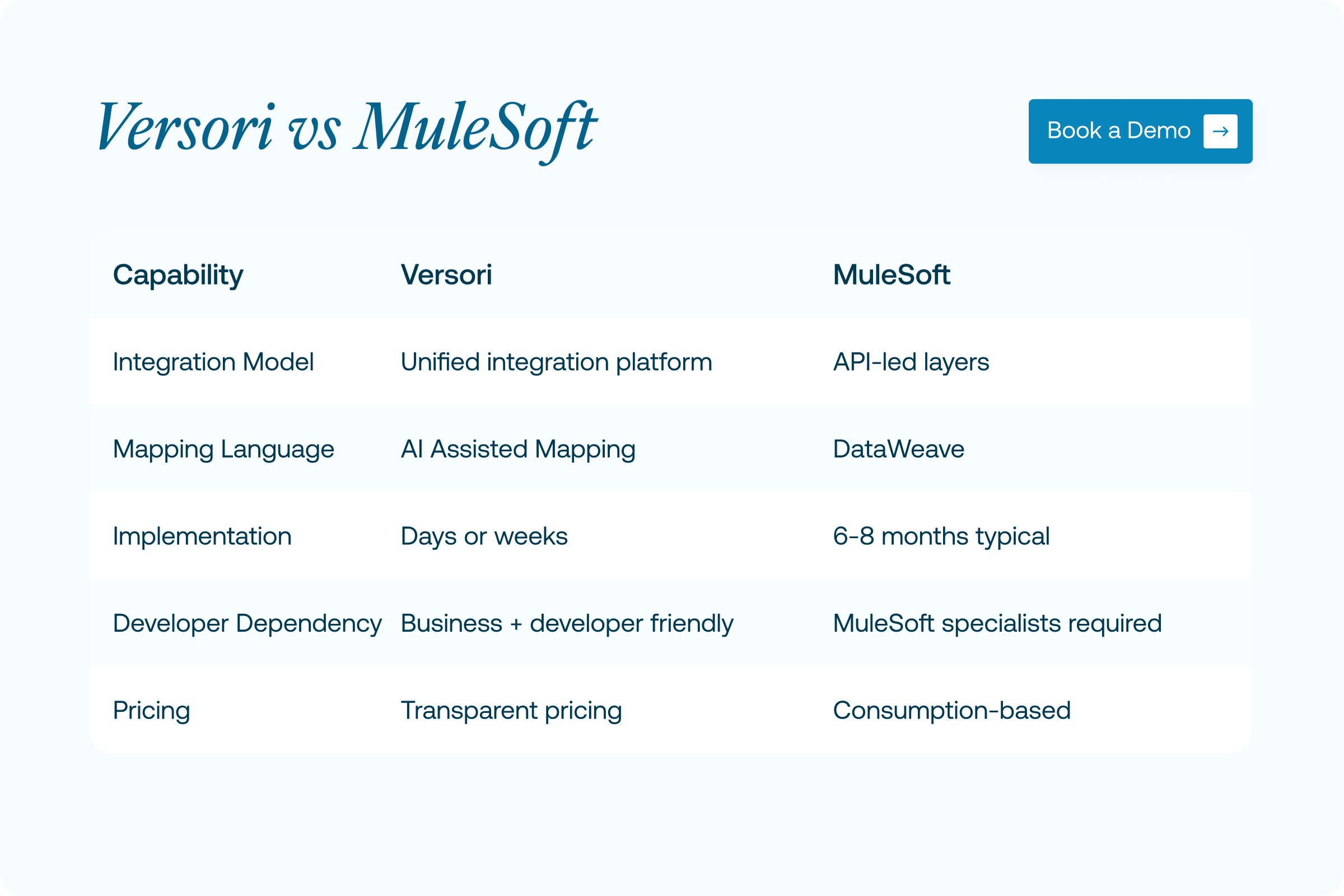
Versori Vs MuleSoft
Enterprise Integration Power, Without MuleSoft Complexity
MuleSoft is a powerful enterprise integration platform built around API-led architecture. However, projects often require specialised developers and months of implementation.
Versori delivers similar integration capabilities with a simpler development experience and significantly faster time-to-value.
Key Comparisons
API Integration Without Complexity: Versori supports robust API integration while reducing developer workload through AI-assisted mapping and a visual builder.
Faster Deployment: MuleSoft projects often require dedicated integration teams. Versori can deploy across cloud, hybrid or on-prem environments with minimal ramp-up.
Balanced Control: Business users can create integrations visually, while developers maintain control through scripting, GitOps workflows and CLI tooling.
Versori vs MuleSoft
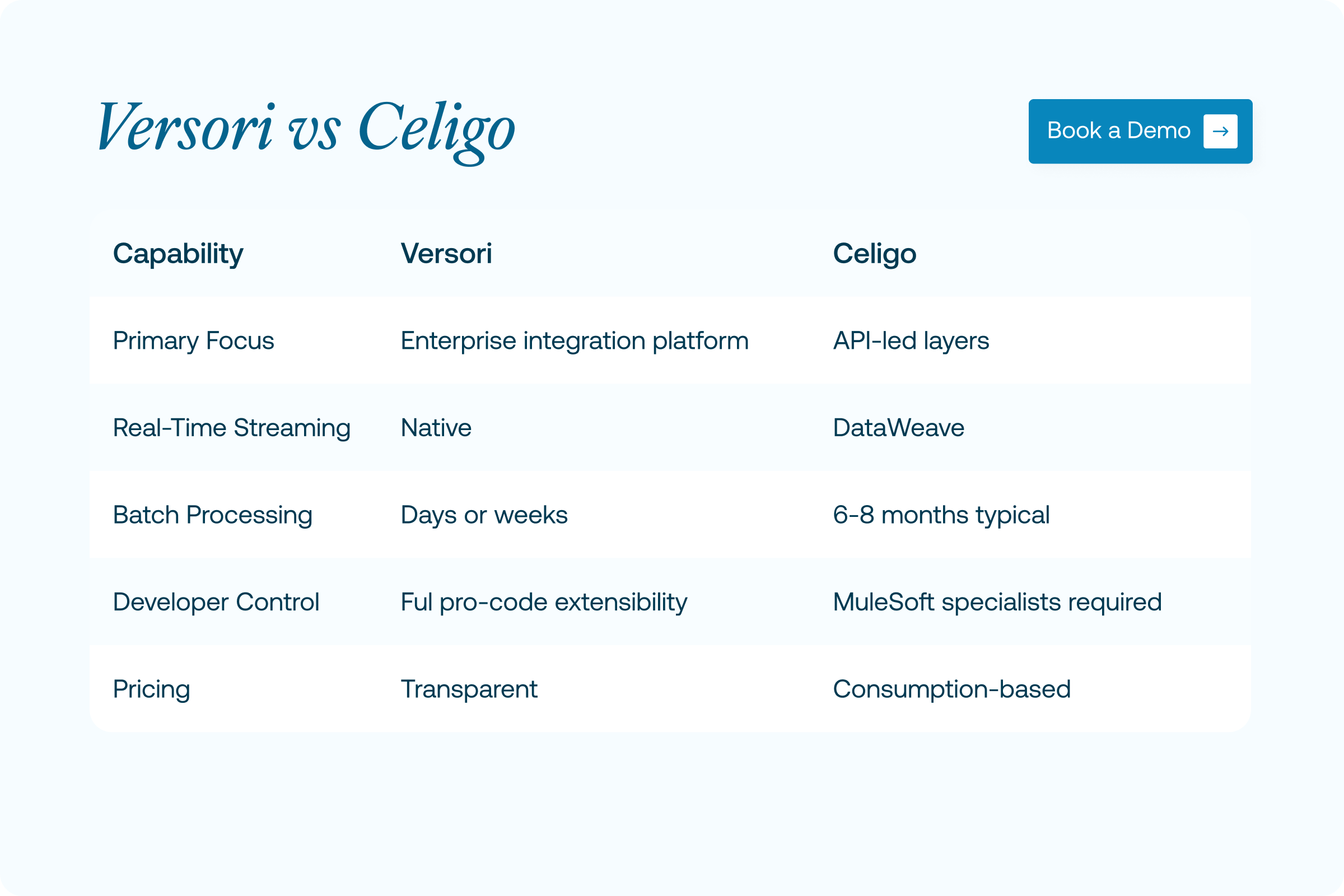
Versori Vs Celigo
Real-Time Flexibility Meets Hybrid Architecture
Celigo is known for simplifying SaaS and ecommerce automation. When organisations need deeper control, real-time streaming or hybrid architecture, Versori offers a more flexible platform.
Key Comparisons:
Real-Time Data Flows: Versori supports event-driven architecture and large-scale batch processing, enabling real-time synchronisation across systems.
Developer Extensibility: While Celigo focuses on low-code automation, Versori supports scripting, SLI tools and GitOps workflows for complex enterprise use cases.
Enterprise Flexibility: Vesori supports hybrid deployment and deeper integration control, while still enabling business teams to build integrations visually.
Versori vs Ce
Modern Integration Starts Here
Legacy Integration Tools Were Built For A Different Era Of Software
Versori combines:
AI-powered connector development
real-time streaming architecture
hybrid deployment
predictable pricing
So organisations can build integrations faster and scale without operational complexity.

.png)